Temperature is a thermodynamic variable that calculates the heat content of a material. For temperature measurement, the temperature-dependent properties of materials such as thermal expansion, electric resistance on metallic conductors , and electromotive force -EMF- (resulting from the temperature difference measured by thermocouples) and so on must be considered.
A thermocouple is a sensor, consist of two wire legs made from different metals used to measure temperature. The wires legs are welded together at one end, creating a junction. This junction is where the temperature is measured. When the junction experiences a change in temperature, a voltage is created. then by using compensation or extension cable we are able to transmit the measured voltage by the temperature sensor to the control room and monitor the temperature. By using ASCO compensation and extension cable the voltage drop is minimized and we could have an accurate measuring.
• These cables are available as non-insulated solid conductor and insulated conductor types which are compatible with K, T, R, S, etc.
• Some of the most important advantages of these extension and compensation cables includes noise resistance, highly accurate signal transmission in long distances and extended lifetime.
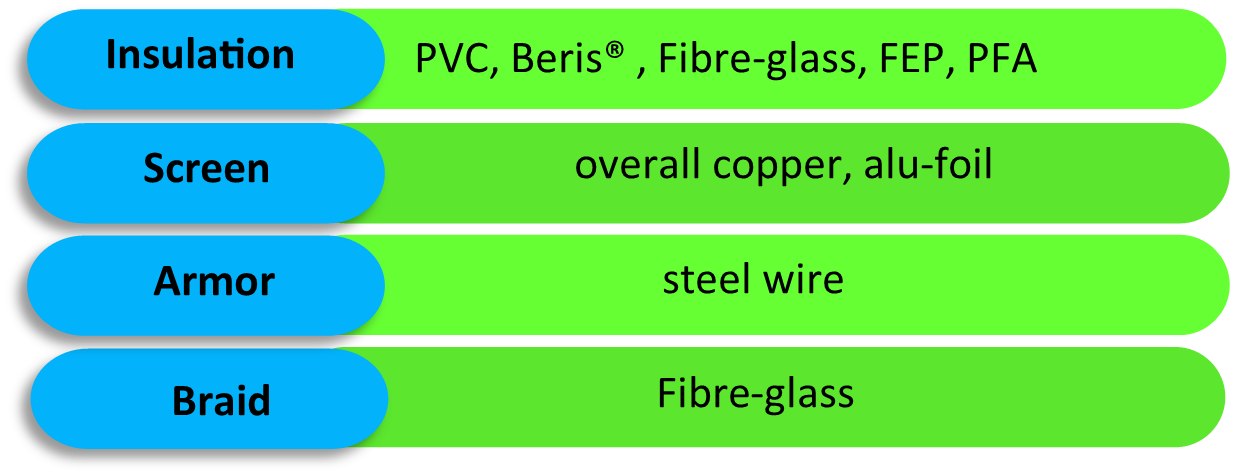
• Compensation cables are manufactured and insulated with different materials and structures. The most important factors in selection of a suitable cable structure includes, the physical and chemical conditions and the temperature of the site in where compensation cables are installed (temperature range of the thermocouple), the physical and chemical conditions of the compensation cable passages, the dry or wet environment, the presence of corrosive material, the distance in which voltage is transmitted (in order to select the correct thermocouple wire diameter; because the resistance produced by the wire, increases the errors may occur in the measurements), fixed-installation or flexible application.thermocouples.
Compensating cable is a thermocouple measuring circuit cable, which is identified by the letter C (e.g. for type K cable KC). Wires of the compensating cable have the same electrical features as the sensor's thermo wires, but they are not exactly same materials as the thermo wires of the Thermocouple sensor. Compensating cable is a more cost effective solution than extension cable, but the maximum ambient temperature allowed is lower, approximately 100…200 °C depending on the insulation material.
Extension cable is a thermocouple cable which is identified by the letter X (e.g. for type K cable KX). Wires of the extension cable are of exactly the same materials as the thermo wires of the thermocouple sensor, so these cables can transmit the measured voltage with the lowest voltage drop and can be used for longer distances. These cables can achieve even the same ambient temperatures as the thermocouple can.